
|
|
|||
|
|
||||
|
|
 |
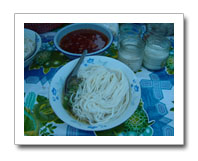
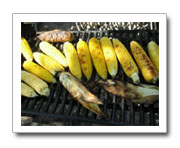
Lao cuisine, like that of neighbouring Southeast Asian countries, revolves around rice. This isn't the long grain rice that Vietnamese, Central Thai and most Westerners are used to eating, however, but khao niaw, or glutinous 'sticky rice' deftly rolled into a neat, small ball and eaten with the hand. In Vientiane, the Lao capital, as indeed in all other large towns, long grain rice or khao jao is readily available--but khao niaw remains the basic staple of the Lao people, and is the single most distinctive feature of Lao cuisine. Another essential is fish sauce or naam paa, which is the universal Lao condiment. Sticky rice, then, forms the central theme of virtually every Lao meal. It is generally accompanied by a selection of dips, parboiled vegetables, salad, soup and various curried meat dishes or fish dishes. The sticky rice is generally served in a simple but attractive woven bamboo container called a tip khao. It's considered bad luck not to replace the lid on top of the tip khao at the end of the meal. Whilst sticky rice is eaten by hand, long grain rice is always eaten with a spoon and fork. Chopsticks are reserved for Chinese-style noodle dishes or for use in Chinese and Vietnamese restaurants. Lao food is quite similar to Thai food--and indeed identical to much of the food eaten in Thailand's ethnically Lao Northeast. Dishes are generally cooked with fresh ingredients that include vegetables, poultry (chicken, duck), pork, beef and water buffalo. Fish and prawns are readily available but are nearly always freshwater, since Laos is a landlocked country relatively far from the sea. Mutton and goat are not eaten except by the country's small South Asian Muslim population, nearly all of whom live in Vientiane. Up c Popular Lao dishes include tam som--really the equivalent of Thai som tam--a spicy salad made of sliced green papaya mixed with chilli peppers, garlic, tomatoes, ground peanuts, field crab, lime juice and fish sauce. This is often eaten with sticky rice and ping kai or grilled chicken. Another standby is laap, a spicy dish of minced meat, poultry or fish mixed with lime juice, garlic, chilli pepper, onion and mint. Meats used in laap are generally cooked--unlike laap dip in northern Thailand--but can also be raw. If you are concerned about this, ask for laap suk, or cooked laap. Other popular Lao dishes include tom khaa kai, or chicken soup with galingale and coconut milk, kaeng jeut, or mild soup with minced pork and bitter gourd, and khao laat kaeng, or curry served on a bed of khao jao long grain rice--all virtually identical with Thai dishes of the same name served on the other side of the Mekong. For breakfast or a snack at any time of the day, Vietnamese pho or noodle soup is extremely popular, as are yaw jeun or deep-fried spring rolls. For a variant, try yaw dip or fresh spring rolls. Vietnamese food is good and plentiful, especially in Vientiane and the larger cities. The same is true of Chinese food, which is generally Cantonese or Hokkienese, though some Yunnanese food is for sale in Vientiane. Other popular cuisines available include Thai--just about everywhere--Italian and French (especially in Vientiane and Luang Prabang) and South Asian (only in Vientiane). Laos is an excellent place for breakfast, chiefly because of the French colonial legacy. French bread or khao jii is freshly baked each day and served with pate, fried eggs and omelette. Good coffee is also available, and it's possible to start the day with coffee and croissants in the major urban centres, though up country the croissants may have to be replaced with pah thawng ko or deep-fried Chinese dough sticks. Fruit
|

|
|
||







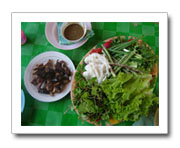
 ountry, particularly in the north, jungle foods and game are popular--besides wild boar and deer this includes such unlikely animals as pangolin, monitor lizard, civet, wild dogs and field rats.